5 copywriting examples you need to know about

Every copywriter knows: you need captivating copy to get your audience to listen to what you have to say. Copy can make or break engagement and conversions.
Even the simplest of changes has such a powerful impact. In just one example of copywriting that makes an impact, Unbounce changed its call to action from “Start your free 30-day trial” to “Start my free 30-day trial.”
This one minor change had a big impact. They saw a 90% increase in conversion rates.
If you want to become a more effective copywriter, it’s time to learn from the best.
In this blog, we’ll take a look at examples of copywriting work that hit the target and saw sales soar.
Copywriting examples for social media: Hitting the right tone
Before we dive into copy examples, let’s spend a minute unpacking tonality. You might like a witty tone, or a clever one, or even a tone that is close to insulting (here’s looking at you, Wendy’s), but when it comes to marketing copywriting, you have to keep the brand and its personality in mind. Your audience might not mind getting roasted by their pizza place, but won’t appreciate the same treatment from their local GP. It’s also not a good idea to vary your tone day-to-day; consistency is key.
Your copywriting tone builds your brand personality, fosters trust and engagement, and creates those valuable emotional connections that sets you apart from the competitors.
An audience-aligned tone, consistent messaging, and an authentic and human brand voice will ensure that your copywriting achieves its goals.
In these copy examples, we’ll explore 5 types: witty, authoritative, benefit-driven, playful, and emotive.
Witty copywriting 101: A masterclass from Oatly
Oatly is a brand that’s taken copywriting to the next level. From their packaging and socials to their website and stunning out-of-house campaigns, they really do know what they’re doing and who they’re talking to. Their copywriting is characterised by playful irreverence and a willingness to challenge established conventions already in the dairy industry. The copy is daring and catches your attention. It makes you want to read the side of a milk carton.
Examples of copywriting work that really shines are their lines, “It’s like milk, but made for humans.” and "Wow, no cow.”.
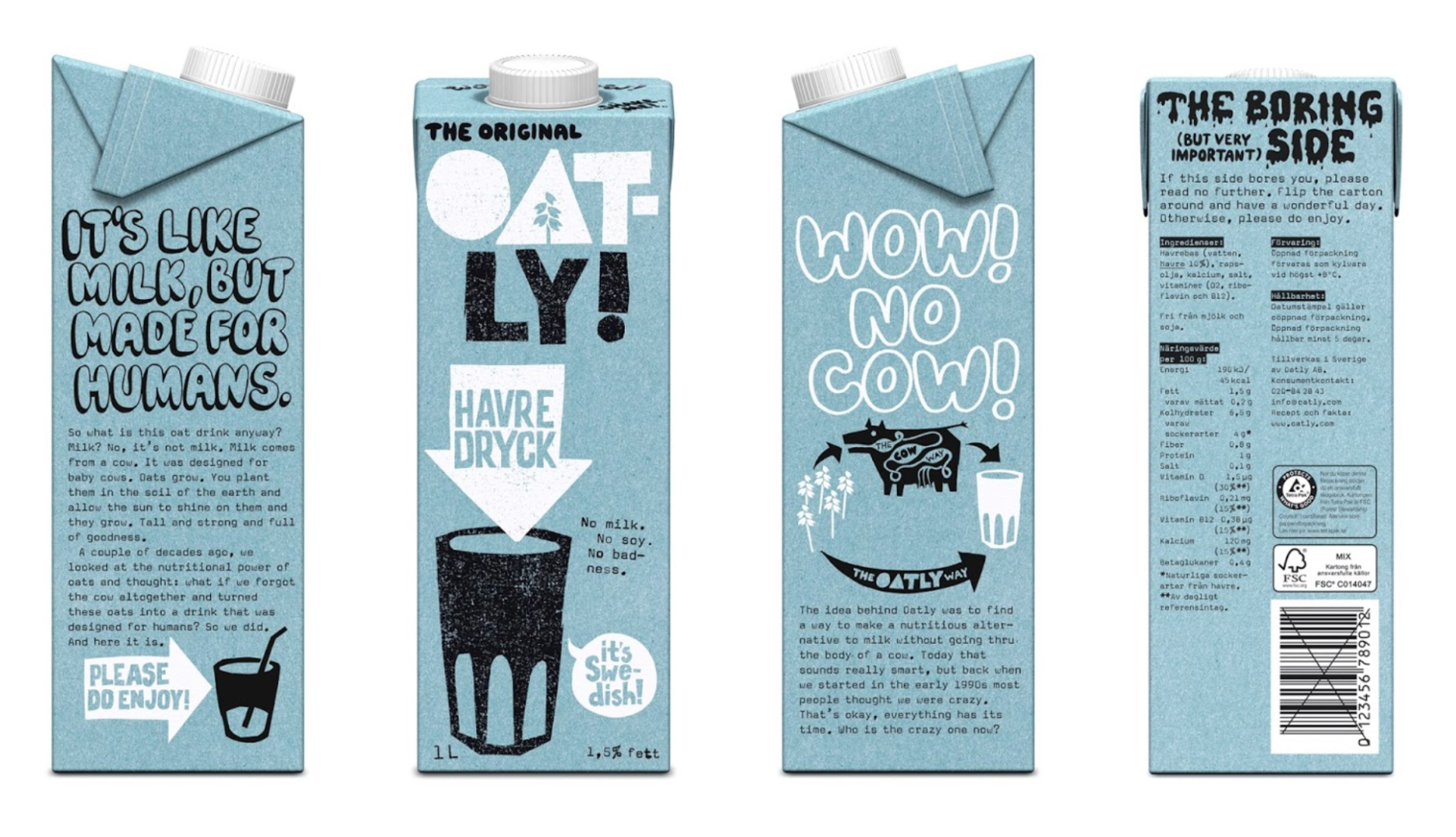
Their irreverent brand voice resonated with a younger, eco-conscious audience who appreciated the honesty and humour in their marketing. Oatly's copywriting focuses on telling the story of the brand and its commitment to sustainability.
They highlight their dedication to minimising environmental impact, such as water usage and carbon emissions, in a compelling and relatable way. They ran ads that openly critiqued the dairy industry and drew attention to the benefits of oat milk in a straightforward, no-nonsense way. On social media, their ability to maintain a two-way conversation with their customers is a key aspect of their content strategy.
Just a caveat: sometimes witty copywriting backfires. When Oatly received backlash for being backed by Blackstone, they reacted by creating the website fckoatly.com which highlights all the controversies around the brand and their response to them.
An “oops, we spilt the milk” style cheeky apology works well for trivial things like sending an email out wrong or a spelling mistake on social media but when we’re talking real-world impact, it really dilutes the response.
Authoritative copy examples from “humblient” Zendesk
Zendesk has hit the perfect balance between being authoritative and technical and approachable and friendly in their tone. Their copywriting shows that they are ready and willing to solve customer challenges by addressing customer pain points and positioning Zendesk as an expert-led solution.
Zendesk uses its newsletter sign-up box as an opportunity to build rapport with its audience and invite them to learn more.
It clearly communicates the benefit to the reader by suggesting they can read about Zendesk’s software at their own pace. They use human, emotive language to make a connection between the brand and the reader. Testimonials and social proof backs up their claims and builds credibility even more.
They never use jargon, preferring simple, clear wording to get their message across. Internally, they refer to themselves as “humblident”, a mix of humility and confidence to relate to customers.
Relatable authoritative copy examples include phrases like “build lasting relationships with our complete customer service solution” or “unlock the power of customer experiences”, “find the secret to decluttering your inbox” or “how we got our toddler to like vegetables”.
All of this implies a deep understanding of business needs, and how Zendesk is prepared to meet them.

Playful copywriting from Gousto
Evocative doesn’t always have to mean “controversial”, as these examples of copy writing from Gousto will prove. Gousto uses confident, colourful and creative wording and an easy-going, conversational tone to focus on the joy and emotion of cooking. You can see this in their slogans, ad copy and social posts:
- “Give it some Gousto”
- “Whip up Wagamama at home”
- “Craving goodness? Eat like Joe this week.”
- “Avoid soul-crushing queues.”
In one marketing copy example, they named a range of dishes the “Veg Table”, because each dish contains all five portions of your five a day. Their copywriting extends to their recipe cards and packaging, with playful names like “The Air Fryer Express”, “Taberna Mexicana” and “Fine Dine In”.
Even if you’re intimidating by cooking a full meal for yourself or your family, Gousto makes it feel like fun, not a chore.
Examples of copywriting that sparks emotion
Shopify’s “Let’s Make You a Business” campaign uses lighthearted, highly relatable copy to grab its audience’s attention and forge an emotional connection.
It highlights something that is true for small business owners. A small business owner’s first customer is a family member which means they’ll instantly resonate with the copy used across this campaign.
If you are looking for copywriting examples for social media that really builds trust, visit Diaspora Co’s Instagram page. They use lines like “"Boycotting climate obstructive brands? Let us help you find alternatives," to reinforce their values and get to the heart of their customers’ concerns.
And if you want to evoke a sense of FOMO, visit your Spotify app in December. Their annual Spotify Wrapped campaign creates a real sense of community and humour (e.g., "Time is a construct, but we kept track anyway") while nudging non-premium subscribers to move up a tier.
Sometimes your brand will evoke negative emotions, and it’s best to address it head-on. Last Crumb luxury cookies lean into its high price point with the line “The world's most expensive cookies, worth every damn bite". Heinz also cheekily mentioned customers’ frustration when they complained about how hard it is to get the ketchup out of the bottle with the tag, “Heinz is slow good”.
Final thoughts: Copy examples you need to know about
In conclusion, copywriting is the direct connection between your brand and your audience.
Copywriting not only communicates your brand’s value proposition but it also builds a brand personality that resonates with your audience.
It’s the persuasive force behind all your marketing.
TL;DR
👉 The brands above really understand their audience and have clear goals in mind when shaping what the copy needs to look like.
👉 Shopify created a strong campaign based on copy that’s evergreen. Their “Let’s Make You a Business” campaign still floats around today.
👉 A common theme with all of these examples is that the copy is short and direct. You don’t need paragraphs of copy to make the point clear.
FAQs
- How to improve SEO copywriting for UK-based websites?
When it comes to SEO copywriting, there’s no need to reinvent the wheel. Study copy examples that inspire you, and find a way to weave in the keywords you want to rank for. Don’t forget to adhere to SEO best practices either: use the proper copy hierarchy (H1, H2, H3), use your top-ranking keywords every 200 words, and don’t forget to naturally include keywords in headings. Localised content is key, so don’t forget to weave in copy that emphasises where you are based and how you can serve your market.
- Where to find copywriting ideas for social media posts promoting new apps?
Join a copywriters’ collective, browse popular social media posts for apps you admire, and tap into the pulse of your target audience. What are they watching, listening to and reading online? This will give you a sense of what resonates with the people you want to speak to. Next, match those wants and needs up with your product benefits. How do you uniquely resolve the pain points they are experiencing?
- How do major online marketplaces write their checkout page copy?
Major online marketplaces write checkout copy to quietly remove friction and anxiety: headings are literal (“Secure checkout”, “Review and place your order”), steps are clearly labelled (“Shipping”, “Payment”, “Review”), and form labels are boring but unambiguous (“First name”, “Postal code”) with tiny helper text that prevents mistakes (“We’ll only use this to send order updates”).
The main CTA is always obvious action + outcome (“Confirm and pay” or “Place your order”). There’s no clever wording that might cost conversions.